Dragon Age: The Veilguard

Antimatter

Administrator
Staff member
Messages
1,748
While EA is reporting huge DA4 pre-orders for their investors, every new detail I see disclosed about the game makes me facepalm.


That's all fine and dandy, and yet:


Here is a good video about the case:


And props to WolfheartFPS for speaking out loud:


Enuhal

Habitué
Messages
149
I can understand that sticking to player decisions across a rather big franchise gets quite complicated, especially after three relatively complex games. However, considering the super long developement time for this game a bit more effort in that regard could certainly be expected nowadays, especially for the really big decisions.

What puzzles me is that any BioWare game is getting "huge preorder numbers" these days. I would have expected the majority of costumers to feel burned after Andromeda and Anthem; I almost never pre-order games anymore in general but doing so for a BioWare game after all that has happened seems especially puzzling. I think the only games I pre-ordered in the last couple of years are Obsidian games, specifically Deadfire and Pentiment - both of which I didn't regret (I have a decent amount of trust in Josh Sawyer as a game designer, and I took that risk since he helmed those projects). I also pre-ordered Age of Mythology: Retold because I knew I was going to play it anyway, even if it turned out not as great, and wanted to support the studio (despite some mediocre products in the past), because I am heavily invested in Age of Empires II: Definitive Edition, so I want them to do well.

 

O_Bruce

Habitué
Messages
461
When MrMatty said that romance dialogue are cringe, I was kinda skeptical. Then he provided an example and yeah... I felt embarrassed on writer's account. I do agree that in general, people, at least when meeting in person, do not talk like that. Also, with that example I notice lack of subtext or subtelty. Furthermore is the character that is romancable in that scene utterly ok with saying everything out loud so that everyone around could hear it? There's nothing that character would rather to remain low?
 

WarChiefZeke

Habitué
Messages
175
This is like clockwork now. Damage control already started, less than 24 hours after.


The "mature tone of the original trilogy" is more than an art style, and I hope they realize that (they don't). That is not to say art style isn't important, but Mass Effect has something truly special going with its narrative and choices.
 

Antimatter

Administrator
Staff member
Messages
1,748
Jason Schreier has published an article "what went wrong with Veilguard", and it's painful to read even after we know what the game was. Just... no comments


Throughout 2020, the pandemic disrupted the game’s already fraught development. In December, Hudson, the head of the studio, and Darrah, the head of the franchise, resigned. Shortly thereafter, Gary McKay, BioWare’s new studio head, revealed yet another shift in strategy. Moving forward, the next Dragon Age would no longer be multiplayer.

“We were thinking, ‘Does this make sense, does this play into our strengths, or is this going to be another challenge we have to face?’” McKay later told Bloomberg News. “No, we need to get back to what we’re really great at.”

In theory, the reversion back to Dragon Age’s tried-and-true, single-player format should have been welcome news inside BioWare. But there was a catch. Typically, this kind of pivot would be coupled with a reset and a period of pre-production allowing the designers to formulate a new vision for the game. Instead, the team was asked to change the game’s fundamental structure and recast the entire story on the fly, according to people familiar with the new marching orders. They were given a year and a half to finish and told to aim for as wide a market as possible.

This strict deadline became a recurring problem. The development team would make decisions believing that they had less than a year to release the game, which severely limited the stories they could tell and the world they could build. Then the title would inevitably be delayed a few months, at which point they’d be stuck with those old decisions with no chance to stop and reevaluate what was working.

At the end of 2022, amid continually dizzying leadership changes, the studio started distributing an “alpha” build of Dragon Age to get feedback internally and from outside playtesters. According to people familiar with the process, the reactions were concerning. The game’s biggest problem, early players agreed, was a lack of satisfying choices and consequences. Previous BioWare titles had presented players with gut-wrenching decisions. Which allies to save? Which factions to spare? Which enemies to slay? Such dilemmas made fans feel like they were shaping the narrative — historically, a big draw for many BioWare games.

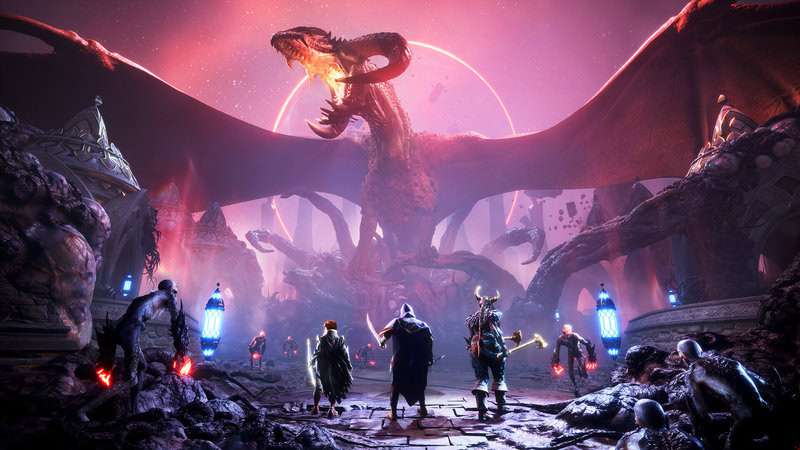
But Dragon Age’s multiplayer roots limited such choices, according to people familiar with the development. BioWare delayed the game’s release again while the team shoehorned in a few major decisions, such as which of two cities to save from a dragon attack. But because most of the parameters were already well established, the designers struggled to pair the newly retrofitted choices for players with meaningful consequences downstream.

In 2023, to help finish Dragon Age, BioWare brought in a second, internal team, which was working on the next Mass Effect game. For decades there’d been tension between the two well-established camps, known for their starkly divergent ways of doing things. BioWare developers like to joke that the Dragon Age crew was like a pirate ship, meandering and sometimes traveling off course but eventually reaching the port. In contrast, the Mass Effect group was called the USS Enterprise, after the Star Trek ship, because commands were issued straight down from the top and executed zealously.

As the Mass Effect directors took control, they scoffed that the Dragon Age squad had been doing a shoddy job and began excluding their leaders from pivotal meetings, according to people familiar with the internal friction. Over time, the Mass Effect team went on to overhaul parts of the game and design a number of additional scenes, including a rich, emotional finale that players loved. But even changes that appeared to improve the game stoked the simmering rancor inside BioWare, infuriating Dragon Age leaders who had been told they didn’t have the budget for such big, ambitious swings.

“It always seemed that, when the Mass Effect team made its demands in meetings with EA regarding the resources it needed, it got its way,” said David Gaider, a former lead writer on the Dragon Age franchise who left before development of the new game started. “But Dragon Age always had to fight against headwinds.”

Early testers and Mass Effect leads complained about the game’s snarky tone — a style of video-game storytelling, once ascendant, that was quickly falling out of fashion in pop culture but had been part of Goldman’s vision for the multiplayer game. Worried that Dragon Age could face the same outcome as Forspoken — a recent title that had been hammered over its impertinent banter — BioWare leaders ordered a belated rewrite of the game’s dialogue to make it sound more serious. (In the end, the resulting tonal inconsistencies would only add to the game’s poor reception with fans.)

A mass layoff at BioWare and a mandate to work overtime depleted morale while a voice actors strike limited the writers’ ability to revise the dialogue and create new scenes. An initial trailer made the next Dragon Age seem more like Fortnite than a dark fantasy role-playing game, triggering concerns that EA didn’t know how to market the game.


When Dragon Age: The Veilguard finally premiered on Halloween 2024 after many internal delays, some staff members thought there was a lot to like, including the game’s new combat system. But players were less impressed, and sales sputtered.

“The reactions of the fan base are mixed, to put it gently,” said Caitie, a popular Dragon Age YouTuber. “Some, like myself, adore it for various reasons. Others feel utterly betrayed by certain design choices.”

Following the layoffs and staff reassignments at BioWare earlier in the year, a small team of a few dozen employees is now working on the next Mass Effect. After three high-profile failures in a row, questions linger about EA’s commitment to the studio. In May, the company relabeled its Edmonton headquarters from a BioWare office to a hub for all EA staff in the area.

Historically, BioWare has never been the most important studio at EA, which generates more than $7 billion in annual revenue largely from its sports games and shooters. Depending on the timing of its launches, BioWare typically accounts for just 5% of EA’s annual bookings, according to estimates by Colin Sebastian, an analyst with Robert W. Baird & Co.

Even so, there may be strategic reasons for EA to keep supporting BioWare. Single-player role-playing games are expensive to make but can lead to huge windfalls when successful, as demonstrated by recent hits like Cyberpunk 2077, Elden Ring and Baldur’s Gate 3. In order to grow, EA needs more than just sports franchises, said TD Cowen analyst Doug Creutz. Trying to fix its fantasy-focused studio may be easier than starting something new.

“That said, if they shuttered the doors tomorrow I wouldn’t be totally surprised,” Creutz added. “It has been over a decade since they produced a hit.”
 
Top Bottom