Wonderful Life

Xzarloxara

Innkeeper
Staff member
Messages
248
Neat! I have always loved biology! Especially Zoology and Phylogeny. So many interesting animals out there...

A fun fact I learned from phylogeny: Birds are actually living dinosaurs, and because all dinosaurs are reptiles, birds are actually a type of reptile as well! I also find it rather interesting that a lot of people have trouble wrapping their heads around this, or even believing it at all. Seems most people think birds are birds and reptiles are reptiles and the two have nothing to do with each other.
 

m7600

Habitué
Messages
1,201
A fun fact I learned from phylogeny: Birds are actually living dinosaurs, and because all dinosaurs are reptiles, birds are actually a type of reptile as well!
Indeed! I've always loved this particular fact. People think I'm crazy when I tell them that birds are actually reptiles! This fact was a major achievement of cladistics. There's a discussion to be had on this point, however. Roughly speaking, from a cladistic point of view, there are three types of group: monophyletic, paraphyletic, and polyphyletic. Obviously monophyletic groups are natural groups, and polyphyletic groups are obviously artificial. What's not so obvious is whether or not paraphyletic groups are artificial. The orthodox view is that they are. But some biologists, such as Ernst Mayr, suggested otherwise. This is the case of reptiles. We know for a fact that they're a paraphyletic group. What we don't really know yet is if that means that they are an artificial group. As for myself, I believe that they are. I think that only monophyletic groups are natural groups.

EDIT: I should clarify. If the reptile group is conceptualized so that it excludes birds, then reptiles are paraphyletic. But they could still be a natural group according to Mayr. A better alternative is to include birds. This way, the reptile-bird group is indeed monophyletic, and there's no need to debate the status of paraphyletic groups.
 
Last edited:

m7600

Habitué
Messages
1,201
Wait, are you saying that if I call a Turian "bird" I'm not insulting them but actually calling them family because I'm a reptiloid?
Maybe? 🤪

Here's something that I learned recently: an octopus has nine brains. They have a large central brain and then a mini-brain for each tentacle. They also have three hearts. Aaand... the correct plural term is not "octopuses" nor "octopi", it's octopodes (Well, it's more controversial than that, actually)


Alesia_BH

Habitué
Messages
912
Hey there, hi there! I'm just writing to acknowledge the existence of this thread. I'll post in continuance of our discussion semi-soon, within the next couple days, whenever I post Aurora's next update.

In the meantime, I'll share a few references for the octopus lovers out there. I highly recommend Sy Montgomery's piece in Orion Magazine, Deep Intellect.


If you enjoy the article, check out the award winning book length follow up, Soul of an Octopus.


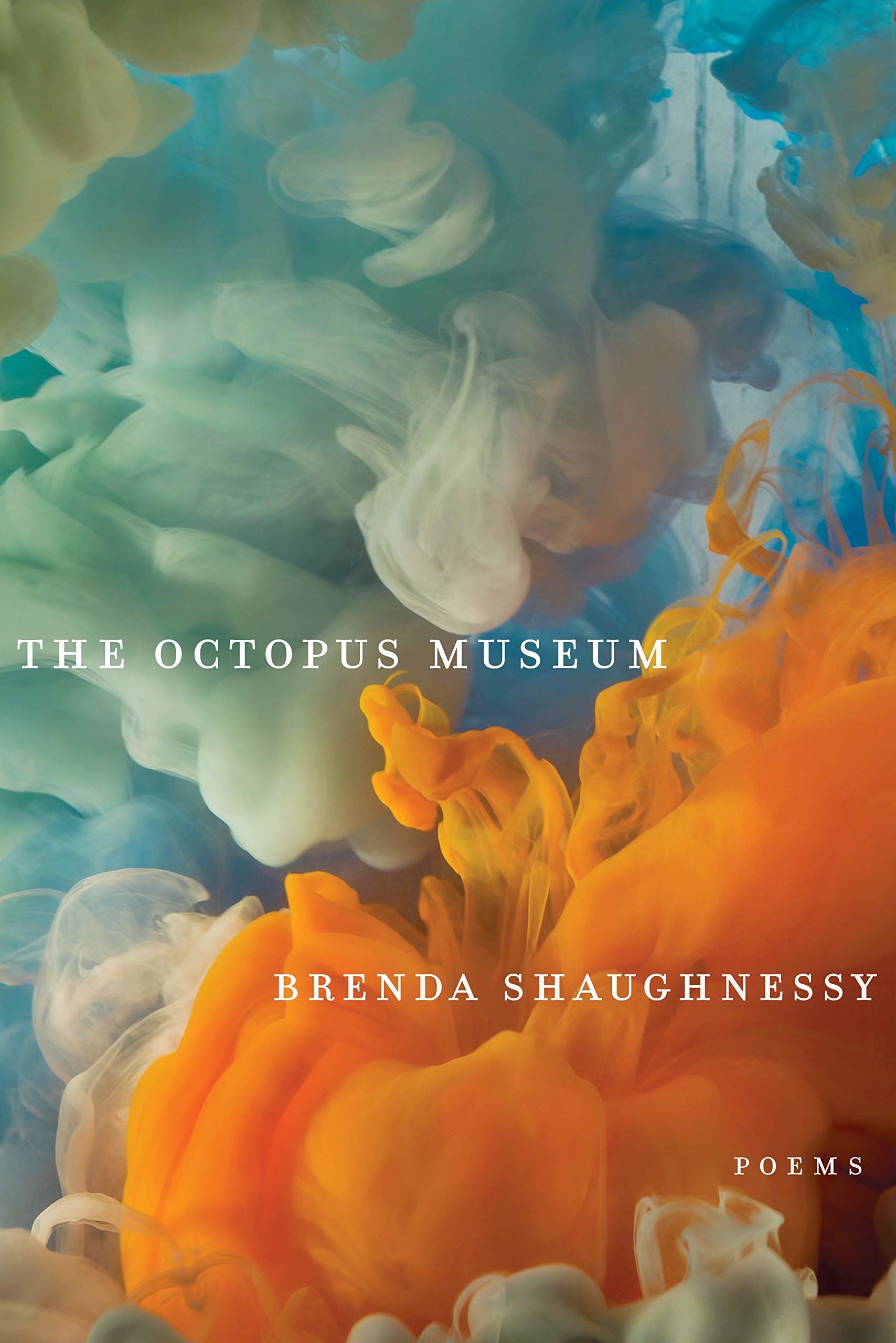
if you still can't get enough octopus stuff, consider my personal favorite, Brenda Shaughnessy's The Octopus Museum.
It's a collection of poetry that envisions a future in which we humans, having destroyed the oceans with our plastics and petroleum, are subjugated by cephalopods who had sought refuge on shore. The titular museum does not contain octopuses: it's owned by octopuses and contains human relics. The poems are written in the voices of humans, gradually losing their minds as the world they knew crumbles.


It's an amusing piece. Example passage below.
Untitled.jpg
 
Last edited:

Alesia_BH

Habitué
Messages
912
Lol. There is no correct in language, other than what we agree upon in the interest of facilitating communication.

Where meaning isn't lost, I'll always vote for the option that promotes inclusivity and minimizes the gatekeeper effect. Octopuses, thank you very much.

The English language is a jumble, what with its words sourced from a multitude of linguistic traditions. The aphonetic Latin alphabet makes matters worse. There's no logic in further complicating things by mandating familiarity with the origins of words just to get plurals right.

 
Last edited:

Urdnot_Wrex

Habitué
Messages
609
You say tomatoe,
I say tomato,
You say octopuses,
I say octopotato?

I'm going to say octopodes from now on!

Not that surprised that they need extra brains for each limb, was wondering anyway how they coordinate them. When I was 16 or 17 I was lucky enough to have a biology teacher who was also a diving instructor, so I got to enjoy a week of scuba diving and once saw an octopus escaping into a hole very quickly when we approached, and it moved all its tentacles with such high speed and dexterity to cover the hole with stones over it that it looked like totally innocent, undisturbed rocky ground within a handful of seconds. I was so impressed.

Nature is cool.
 

m7600

Habitué
Messages
1,201
Back in the 18th Century, Carl Linnaeus classified octopodes in a group called Vermes. Essentially, he thought that they were worms. His critics pointed out that this is hard to take seriously. An octopus doesn't look like a worm. But, in Linnaeus' defense, each tentacle sort of behaves like an individual worm. He didn't know that each tentacle had its own mini-brain, though.

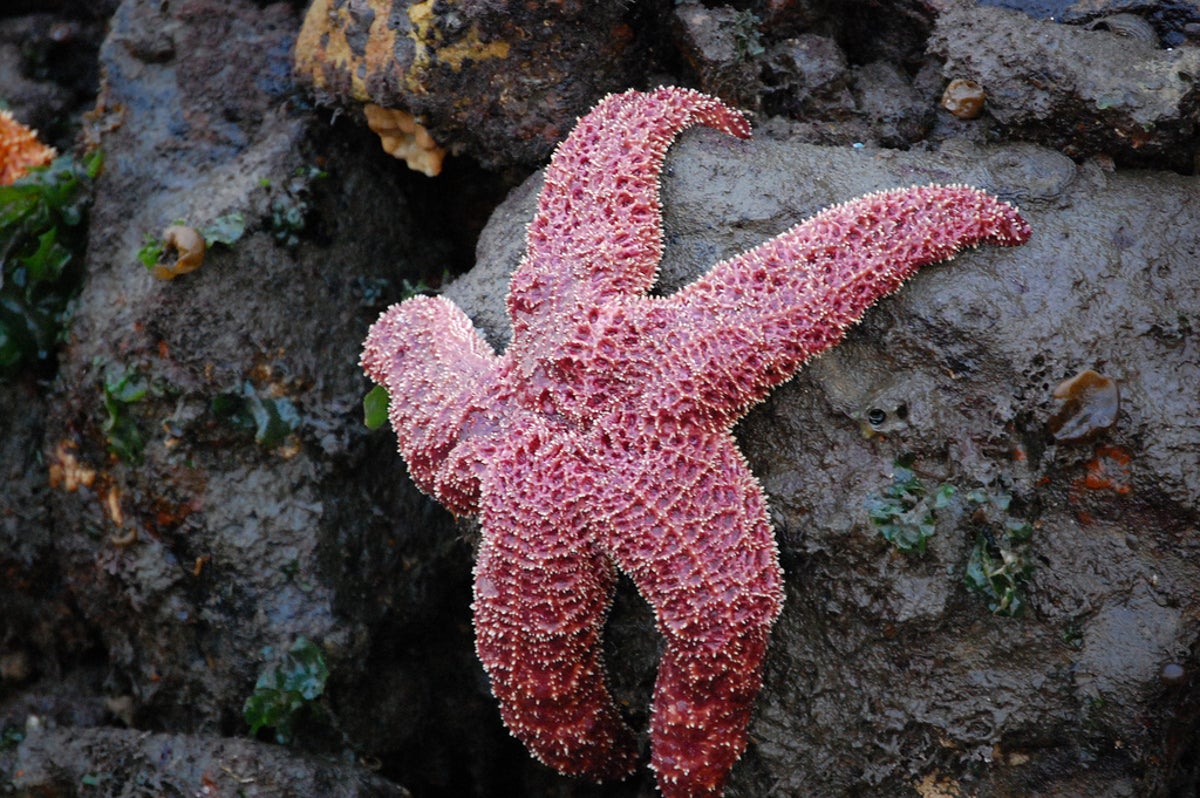
Here's another weird fact that I learned recently, which kind of freaked me out, to be honest. Starfish have eyes. They have eyes at the tip of each arm. Granted, their eyes are not very developed, in fact they're quite crude. But they're still visual organs. I don't know why I find this creepy, but I do, lol.


And here's a video of a starfish moving its arms, they sort of look like individual worms to me:


shmity72

Habitué
Messages
482
Universal grammar (UG), in modern linguistics, is the theory of the innate biological component of the language faculty, usually credited to Noam Chomsky. The basic postulate of UG is that there are innate constraints on what the grammar of a possible human language could be.

Neither proven nor disproven.. I heard about it back in grammar school. (400 level University of Washington) :)...circa 92'
 

mlnevese

Innkeeper
Staff member
Messages
676
Universal grammar (UG), in modern linguistics, is the theory of the innate biological component of the language faculty, usually credited to Noam Chomsky. The basic postulate of UG is that there are innate constraints on what the grammar of a possible human language could be.

Neither proven nor disproven.. I heard about it back in grammar school. (400 level University of Washington) :)...circa 92'
If this proves to be true it will add another layer of difficulty in communication if we ever meet intelligent alien life...
 

shmity72

Habitué
Messages
482
That's interesting because I personally think differences between grammar (sometimes even of moderately related languages) can be quite surprising, sometimes it makes me wonder how the heck people came up with such ideas.
I read some non fiction book about Australian aboriginal languages once. Anyway I forget the name of it but it reinforced that all language has NOUNS and VERBS. Can there be any other way to speak otherwise, and if so~what are we as a species 'talking about' (about is a preposition 'NOUN' linked by the 'VERB' talking>>>nouns and verbs)? 'wh' words to embellish that question are 'why' and 'how'
In the end and to conclude, nouns and verbs seem to be 'inherent' in our DNA. One may not point at a tree without saying 'observe tree'
Nobody I know said 'describe oneself in relation to other'
NOTE: it's also in our DNA to see patterns over probabilities the morpheme 'de' is to put it down in and the morpheme 'scribe' is to essentially 'cut/scribble' it's so much easier and less taxing on human computational powers to just say 'describe'
why describe describe? why hammer hammer? The oxy moron is that to be alive means to interpret or 'live in a binary world' quantum thinking says all things are equal or parallels an atom may be in two places at once until it is 'observed/interpreted/put upon/binary'. heavy shit man :)

Simply by observing a particle in two different quantum states, you cause what is known as wave function collapse and the particle again exists in only one state or the other (and in the case of superposition, only one physical location or the other).Dec 28, 2015

I would also postulate that in the western world language one observes the 'what is it' and in the eastern world 'how'.
west 'one name' god. east 'multiple notions' gods.

What is the platinum rule of Confucius?
The golden rule is to do unto others as you'd have them do unto you; the platinum rule is to do unto others as they'd want done unto them. In other words, reject reciprocity as an ideal, in favor of something like empathy. May 20, 2009
Given this is universal is a notion within our DNA as well?
 

Attachments

  • Describe-Icon-Sm.jpg
    Describe-Icon-Sm.jpg
    26.3 KB · Views: 257
Last edited:
Top Bottom